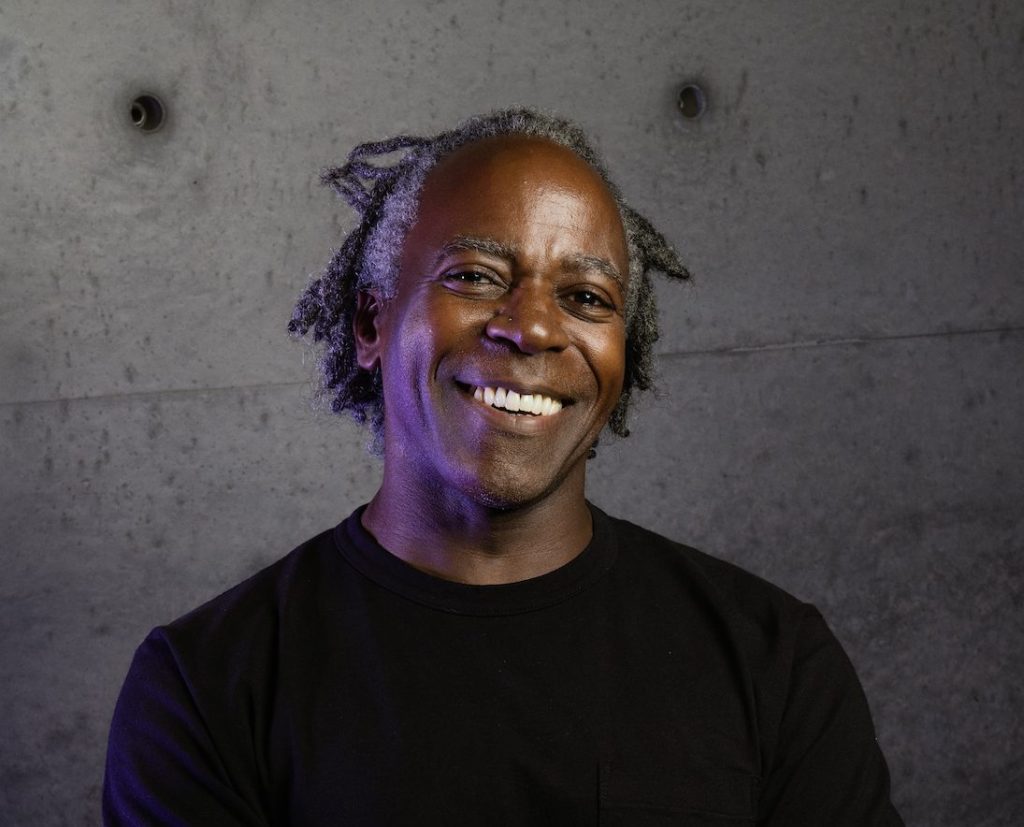
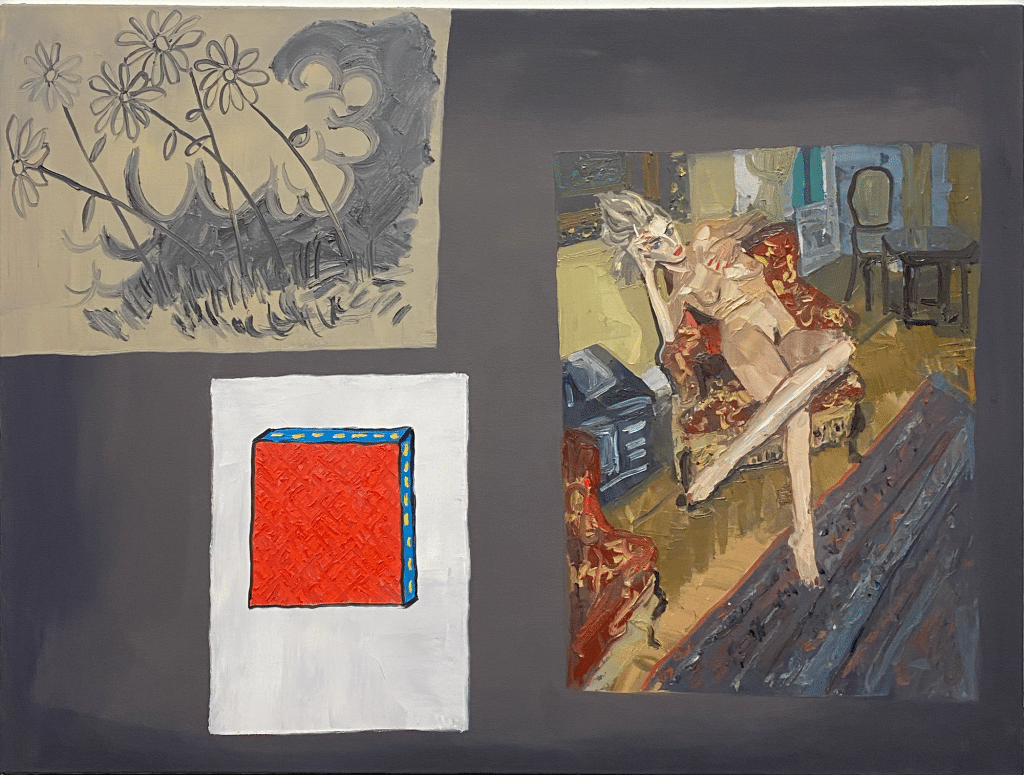
Installation view, “Organgrinder” (2026)/Photo: M. LeBlanc
A man stares into the barrel of the lens as his shadowed body pulls forward from a surrounding sheet of black while his lips sit at the edge of a smile that doesn’t meet his eyes. The gesture of the winging wrinkles around his nose are mimicked by a glowing tube of light that penetrates his septum and spirals down toward his chest where it further punctures the skin and inserts itself securely into the fleshy squish of his pecs, emerging out once more from his nipples.
The man is Fakir Musafar and the piece is “Glowing (Self-Portrait)” (1982), and it is at once sensationally gutting and totally absorbing. This piece is a distilled window into the surrounding exhibition, “Organgrinder,” on view at M. LeBlanc, curated by Ryan M. Pfeiffer, including work by Ron Athey, Richard Hawkins, Robert Mapplethorpe, Paul McCarthy, Pierre Molinier, Hermann Nitsch, Breyer P-Orridge and the aforementioned Fakir Musafar.
Musafar’s “Glowing (Self-Portrait),” particularly the precise moment of puncture encased within it where the inside of the body becomes an accessory to the outside of the body, is echoed across photographs, collages and a couple sculptures and moving images throughout the gallery. Black-and-white silver gelatin prints are the exhibition’s metronome, most of them by Mapplethorpe and depicting sexual encounters that treat biological expulsion as a decisive moment. A tampon-filled gumball machine with the head of a coyote perched on top titled “The Poisonous Trap of Biology, Frozen Replication” (2005) by P-Orridge sits in the center of the first room, the taxidermied predator introducing the body as an object, a trophy, an altar.

Installation view, “Organgrinder” (2026)/Photo: M. LeBlanc
The second room of the gallery holds more photographs by Mapplethorpe, as well as collages by Hawkins including blood-splattered clipped images of Justin Bieber amongst chained-up nude men in varying levels of stiff resistance and slack relaxation. Projected on a wall is Paul McCarthy’s “Heinz Ketchup Sauce” (1974), a single-channel color video of the artist drenching himself in ketchup and writhing facedown on a white table while letting out frustrated groans as his body contorts to coat the plane. The rest of the gallery is permeated by the noise of the artist’s muffled, defeated whimpers, like a child with a tummy ache, and the squelching slop of McCarthy’s body against the slip of the ketchup, resulting in the chorus of a misophoniac’s nightmare anthem.
“Organgrinder” clutches onto a single second—the second a piercing gun clicks, the second the body as a container empties in ejaculation or excretion, the second a soul leaves a body—and stretches that second like taffy, disemboweling it for all its worth. Each work is compositional perfection at odds with its subject matter, leaving the viewer with no choice but to reckon with their own insides—stacks of pulsing organs and pockets of fluids—being all wrung out.
“Organgrinder” at M. LeBlanc, 3514 West Fullerton, through August 29.